



Lock-In Thermography : 락인 열화상
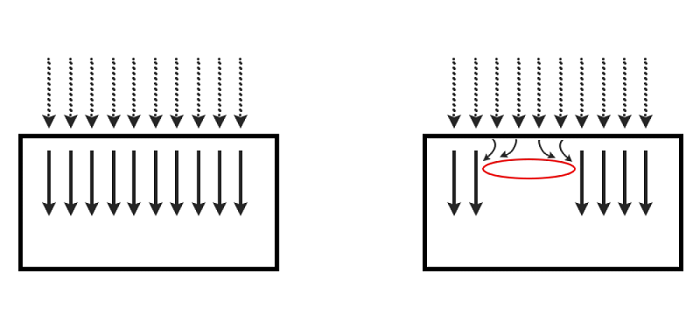
능동형 열화상, 흔히 “락인 열화상”이라고도 불리는 이 방법은 물체 표면 아래의 구조적 결함을 탐지하는 데 사용됩니다. 온도 측정에 중점을 둔 수동형 열화상과 달리, 능동형 열화상은 육안이나 일반 카메라로는 보이지 않는 균열, 닳음, 포함물, 박리 등과 같은 숨겨진 재료 결함을 식별하는 것을 목적으로 합니다.
기본 원리는 짧은 펄스의 고에너지 전자기 복사를 물체에 가하는 것입니다. 이상적이고 결함이 없는 물체에서는 내부의 열에너지 흐름이 등방적이며 모든 방향에서 동일합니다. 그러나 균열 같은 숨겨진 결함이 있으면 에너지 흐름이 방해되어 열적 자극 후 결함 근처의 재료가 다른 속도로 냉각됩니다.
펄스 플래시라이트, 마이크로파, 초음파 또는 와전류 등을 이용해 물체에 에너지를 주입할 수 있으며, 그에 따른 온도 변화를 민감한 열화상기로 포착합니다. 자극 강도, 펄스 간격, 펄스 폭, 자극과 측정 간의 위상 등 매개변수를 조정함으로써 숨겨진 표층 아래 결함을 드러낼 수 있습니다.
Active thermography, also known as “lock-in thermography,” is a method used to detect structural defects beneath the surface of an object. Unlike passive thermography, which focuses on measuring temperature, active thermography aims to identify hidden material defects such as cracks, fraying, inclusions, delamination, and other irregularities that are not visible to the naked eye or visual cameras.
The basic principle involves introducing a short pulse of high-energy electromagnetic radiation into the object. In an ideal, defect-free object, the resulting thermal energy flow inside the body is isotropic, meaning it is the same in all directions. However, if there is a hidden defect such as a crack, the energy flow is disrupted, causing the material near the defect to cool down at a different rate after the thermal stimulation.
Pulsed flashlights, microwaves, ultrasound, or eddy currents can be used to introduce energy into the object, and the resulting temperature variations are captured using a sensitive thermal imager. By adjusting parameters such as intensity, pulse interval, pulse width, and the phase between stimulation and measurement, it is possible to reveal hidden subsurface defects.