



Focus : 초점
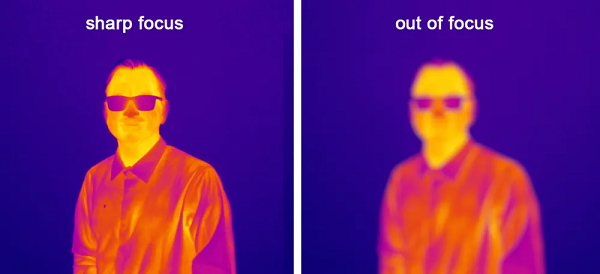
적외선 영상에서 초점(focus)이란 적외선 카메라나 현미경과 같은 광학 시스템을 조정하여 선명하고 또렷한 영상을 얻는 과정을 의미합니다. 이는 렌즈를 정렬하여 빛의 광선이 검출기 위에 정확히 집속되도록 함으로써, 대상 물체를 명확하게 표현하는 것을 포함합니다. 올바른 초점 조정은 세부 정보를 정확하게 포착하는 데 필수적일 뿐만 아니라, 온도 정보의 정확한 산출을 위해서도 매우 중요합니다.
영상이 초점에서 벗어나면 대상은 흐릿하거나 뿌옇게 보이게 되며, 이는 빛의 광선이 제대로 집속되지 않아 세부 정보가 손실되었음을 의미합니다.
피사계 심도(depth of field)는 장면 내에서 허용 가능한 선명도로 보이는 거리 범위를 의미하며, 렌즈의 초점거리, 조리개 크기, 그리고 대상까지의 거리와 같은 요인의 영향을 받습니다. 피사계 심도가 크면 장면의 더 많은 부분이 초점에 들어오고, 피사계 심도가 작으면 매우 제한된 범위만 초점이 맞게 됩니다.
초점 조정 방식에는 사용자가 직접 렌즈를 조절하는 수동 초점(manual focus)과, 모터를 이용해 렌즈를 조절하여 초점을 맞추는 모터 초점(motor focus) 방식이 있습니다.
In infrared imaging, focus refers to the adjustment of an optical system, such as an infrared camera or microscope, to ensure a sharp and clear image. This involves aligning the lens so that light rays converge precisely on the detector, creating a clear representation of the subject. Proper focus is crucial for capturing detailed and accurate images as well as for correcting temperature information.
When an image is out of focus, the subject appears blurry or soft, indicating that the light rays do not converge properly, resulting in a lack of detail.
The depth of field, which is the range of distances within a scene that appear acceptably sharp, is influenced by factors such as the focal length of the lens, the aperture size, and the distance to the subject. A larger depth of field means more of the scene is in focus, while a smaller depth of field means only a narrow range is in focus.
There are different focusing mechanisms, including manual focus, where the user adjusts the lens focus to bring the subject into sharp focus, and motor focus, where the user adjusts the lens with a motor to achieve focus.